Before buying interpretation receivers for a church, separate two decisions: who will translate the sermon, and how that translation will reach the listeners. A receiver package may cover only the second. A useful budget includes the source, distribution, installation and support needed each time the congregation meets.
Describe the use before requesting a model
Write down how many people need each language, the speaking duration, frequency of meetings and room arrangement. Record the sound equipment and connectivity already available, while leaving compatibility to be confirmed.
Ask the supplier for an itemised list and a demonstration under comparable conditions. A connector fitting into a socket does not establish correct signal level or routing. Have the technician confirm the microphone, line or USB connection required by your equipment.
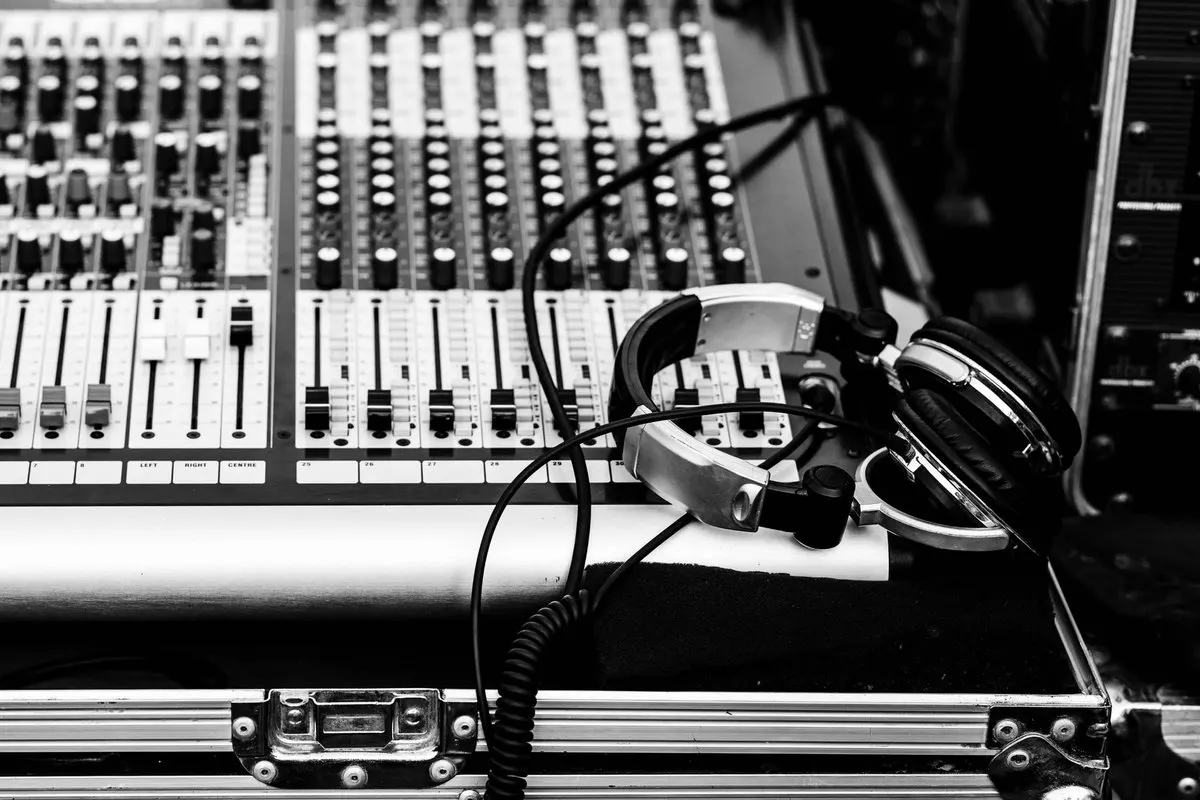
The photograph in this guide illustrates audio production. It is not a recommendation for a particular mixer or evidence that we have tested your installation.
Put all costs on the same worksheet
Scroll the table to see every column.
| Cost item | Quote A | Quote B | What must be specified |
|---|---|---|---|
| Distribution and receivers | To confirm | To confirm | Units, channels and accessories |
| Translation source | To confirm | To confirm | Human or automatic service, preparation and limits |
| Audio and installation | To confirm | To confirm | Interface, cables, setup and technical help |
| One year of use | To confirm | To confirm | Meetings, rental, subscription and consumables |
| Transport and taxes | To confirm | To confirm | Final amount and delivery conditions |
There is no universal equipment price that fits every church. Use dated supplier quotations for the same scope. As a purely hypothetical calculation, €600 of equipment plus twelve services at €400 would total €5,400 before other costs. Those invented figures illustrate the method, not a market tariff.
The translation costs guide separates platform capacity from professional and production work.
Ask what changes when more people join
For receiver systems, ask about extra units, compatible channels, charging and coverage. For browser delivery, check the listener limit, guest devices and network capacity. Neither route should be budgeted as though growth is automatically free.
Also consider additional target languages. A receiver channel needs an interpretation source. In MoriahTech IA, one session provides one target language, so extra simultaneous destinations require a capacity and configuration check.
Put the anticipated increase in the quotation: “What changes if we grow from twenty to fifty listeners?” is more useful than discovering the limit after buying.
Include the work of every meeting
Equipment has to be prepared, distributed, collected, charged, cleaned and stored. Someone needs to maintain spares and resolve problems. Phone-based listening changes that workload but still needs setup, access help and an alternative for people without suitable devices.
Measure the work during a rehearsal. Do not assume the same setup time for every congregation: room layout, audience experience and the number of volunteers affect it.
Prepare materials for human interpreters or arrange a bilingual review of AI output. Being bilingual does not automatically provide the skills or availability required for sustained interpretation. Treat preparation and support as real responsibilities.
Compare receivers with personal phones
Scroll the table to see every column.
| Question | Dedicated receivers | Browser listening |
|---|---|---|
| How does a person start? | Receive device, select channel, adjust audio | Open link or QR, connect headphones, start playback |
| What connectivity is needed? | Depends on the selected system | Internet for operator and listeners |
| Who needs assistance? | People unfamiliar with controls | People unfamiliar with phone access or without a device |
| What happens after the service? | Collection, cleaning and charging | Close the session and support any loan-device process |
Test both routes from the audience, not only at the sound desk. Check clear audio, continuous listening and meaningful comprehension. A few successful devices do not validate the full audience capacity.
Compare hire and purchase over one period
For hire, request transport, installation, support, deposit and loss or damage conditions. For purchase, include storage, maintenance, spares and future assistance. Use the same annual meeting schedule for both options.
There is no single number of meetings at which purchase always wins. Existing equipment, support arrangements and staff time can change the result. A lower price is useful only if the arrangement covers the actual need.
Take a concrete brief to the provider
We need translation from [source] to [target] for [listeners], for [minutes] at [meetings per year]. We currently have [audio equipment and connection]. Please quote the translation source, distribution, accessories, technical help, taxes and expansion conditions separately.
MoriahTech IA for churches offers another route to compare: the operator shares a session and listeners use their phones and headphones in the browser. They need no listener account or app installation. Rehearse that experience before buying equipment for everyone, using the same passage and audience criteria as any receiver demonstration.