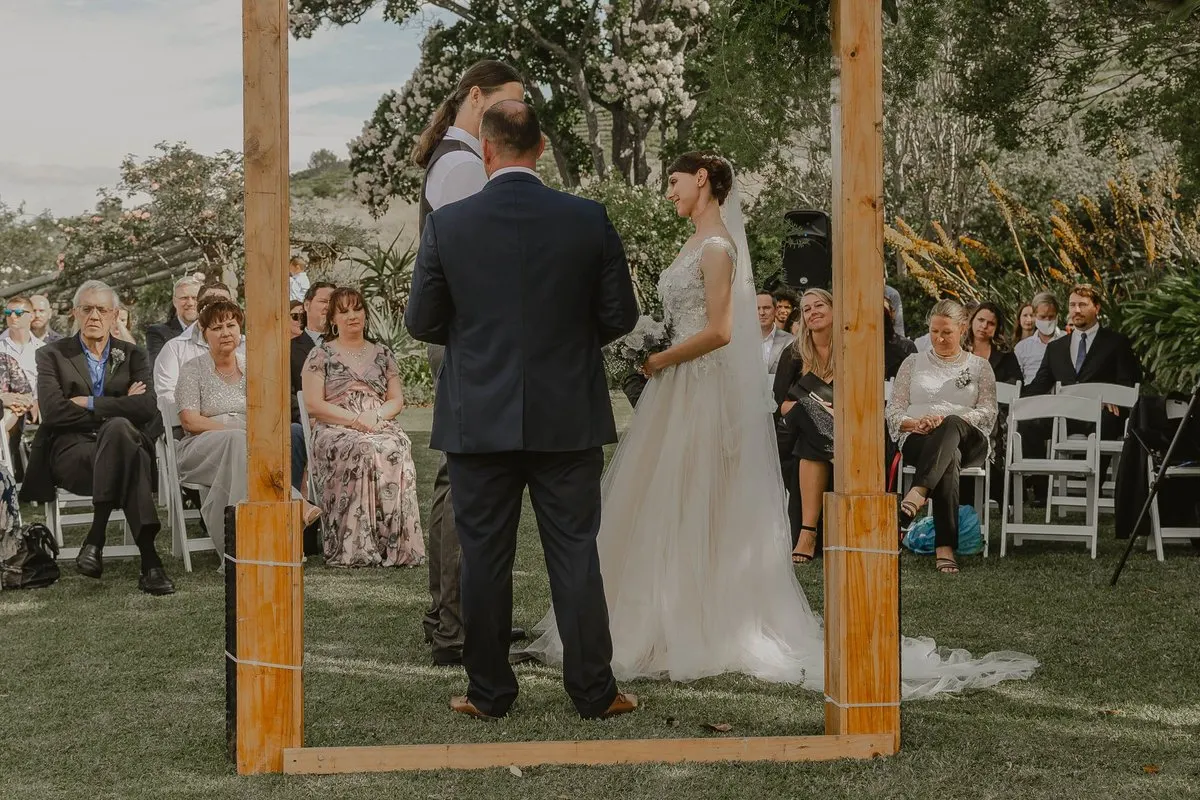
The celebrant tells a story about the couple. One family laughs; the other waits for a whispered explanation. At a bilingual wedding, language affects who participates in the moment. Plan translation around the ceremony, readings and speeches that matter, with a tested listening route and human care for the most personal words.
Map the moments that need language support
A ceremony usually has one main speaker. A reception has many private conversations. Dinner speeches add different voices, humour and music. One system does not have to cover all three.
Scroll the table to see every column.
| Moment | Practical starting point |
|---|---|
| Arrival and seating | Bilingual helpers and clear signs |
| Ceremony | Bilingual celebrant, interpreter or audience translation |
| Vows and prepared readings | Human-reviewed text and an agreed delivery format |
| Reception speeches | Human interpretation or carefully rehearsed AI with a microphone |
| Table conversation | Bilingual guests or a personal conversation tool |
| A meaningful song | Prepared explanation or reviewed lyrics where appropriate |
Mark the parts that change the guests’ experience. This prevents both repeating every sentence throughout the day and promising translation for conversations nobody has planned to capture.
Choose the format for the atmosphere you want
A bilingual celebrant can alternate selected passages while keeping one voice at the front. Decide what is spoken twice and what is offered in writing, since repeating everything lengthens the ceremony.
Consecutive interpretation uses pauses between sections. Everyone hears both languages, but speaker and interpreter need a rehearsed rhythm. Simultaneous human interpretation preserves overlapping delivery for listeners using receivers or phones and provides professional judgement for humour and unexpected changes.
AI translation can distribute spoken material to guests’ devices after a representative test. It can still make mistakes with names, accents, jokes and negations. A fluent result is not proof of emotional or factual accuracy. The interpretation format comparison explains the different responsibilities.
A wedding may combine these approaches: reviewed vows, a prepared bilingual reading and a tested listening channel for the general ceremony. Confirm any formal requirements separately with the celebrant or relevant authority.
Calculate speech time and session structure
Consider a hypothetical ceremony of 35 minutes, two eight-minute speeches, four minutes of announcements and a twenty-minute programme rehearsal. That totals 75 minutes. A fifteen-minute operational margin brings the estimate to 90 minutes.
If 42 guests need the target language, use 42 as the listener requirement. Also record whether ceremony and dinner are separate sessions, how long the longest session remains open and whether any spaces operate simultaneously.
MoriahTech IA’s entry event pack currently provides 150 minutes, one session, up to 100 listeners, a maximum session duration of 180 minutes and one simultaneous session for €49. The minutes might fit this example, while two separate ceremony and reception sessions would not fit its single-session allowance. Use the current event selector with the final programme. Paid packs require request, payment and validation; registration does not activate one.
Capture the voices that matter
Ask the venue for a usable microphone feed from the celebrant, couple, readers and speeches. Hearing those voices through the room speakers does not prove the translation input receives them all.
Rehearse the vows at the real microphone distance. Give readers the microphone before they begin. Coordinate the speech feed with the DJ or technician, and avoid sending unnecessary music into a route intended for spoken words.
Shure’s microphone guidance explains why distance, noise and reverberation affect intelligibility. An outdoor breeze or reverberant church makes the actual venue rehearsal especially useful.
Make guest access part of the invitation
Live translation into [language] will be available on your phone during [parts of the day]. Please bring compatible headphones and a charged phone. Open [link] or scan a code at the venue. If you need another arrangement or help, contact [person] before [date].
Print the final QR code and test it from the distance guests will use. Add a readable link and name the helper. If translation is automatic, describe it honestly as AI-generated and potentially imperfect.
In MoriahTech IA, listeners enter through the browser without an account or installed app. They still need connection, battery and playback activated. Do not leave these instructions until the couple is standing at the front.
Rehearse the ceremony and one small failure
Bring together the coordinator, celebrant, audio technician, bilingual reviewer and guest helper. Read a shortened script with full names, a reading, a date, applause and a closing instruction. Add a speech with a family reference if speeches will use the service.
Listen from the back rows on a device that was not used for setup. Ask someone who depends on the translation what they understood. Then test a screen lock or disconnected headphone and confirm that the helper can restore listening quietly.
Prepare a discreet alternative: a bilingual programme, reviewed text, nearby bilingual support or a brief human clarification. Record who acts for a network problem, missing headphones or an important mistranslation. Do not leave the fallback as “we will work it out on the day”.
Rehearse your wedding’s listening experience, using the event checklist. Test with the actual voices and devices before choosing a pack for the full guest count.