The annual meeting brings together teams who do not share a working language, and the organiser needs a translation plan. AI may be worth evaluating for prepared presentations and training, but the decision depends on the message and the rehearsal. Start by separating informational sessions from moments that require professional human judgement.
Identify which parts need which support
A company event can combine a general welcome, technical training, questions and sensitive decision-making. They need not all use the same approach. Mark where an error could alter an important decision and discuss those sections with qualified professional interpreters.
A prepared informational talk may be suitable for an AI test when a bilingual reviewer can assess it and the team can correct the setup. Rapid negotiation, formal statements or sensitive discussion deserve a different level of judgement and preparation.
Scroll the table to see every column.
| Approach | What to evaluate | What remains to arrange |
|---|---|---|
| Onsite professional interpretation | Human judgement and the complete assignment | Brief, staffing, equipment and delivery |
| Remote simultaneous interpreting | Human work through a remote connection | Platform, sound, visual context and recovery |
| AI audience translation | Meaning and usability in a representative test | Input, network, access, supervision and fallback |
The comparison of human interpretation, RSI and AI helps avoid comparing unlike services.
Build the route before the event
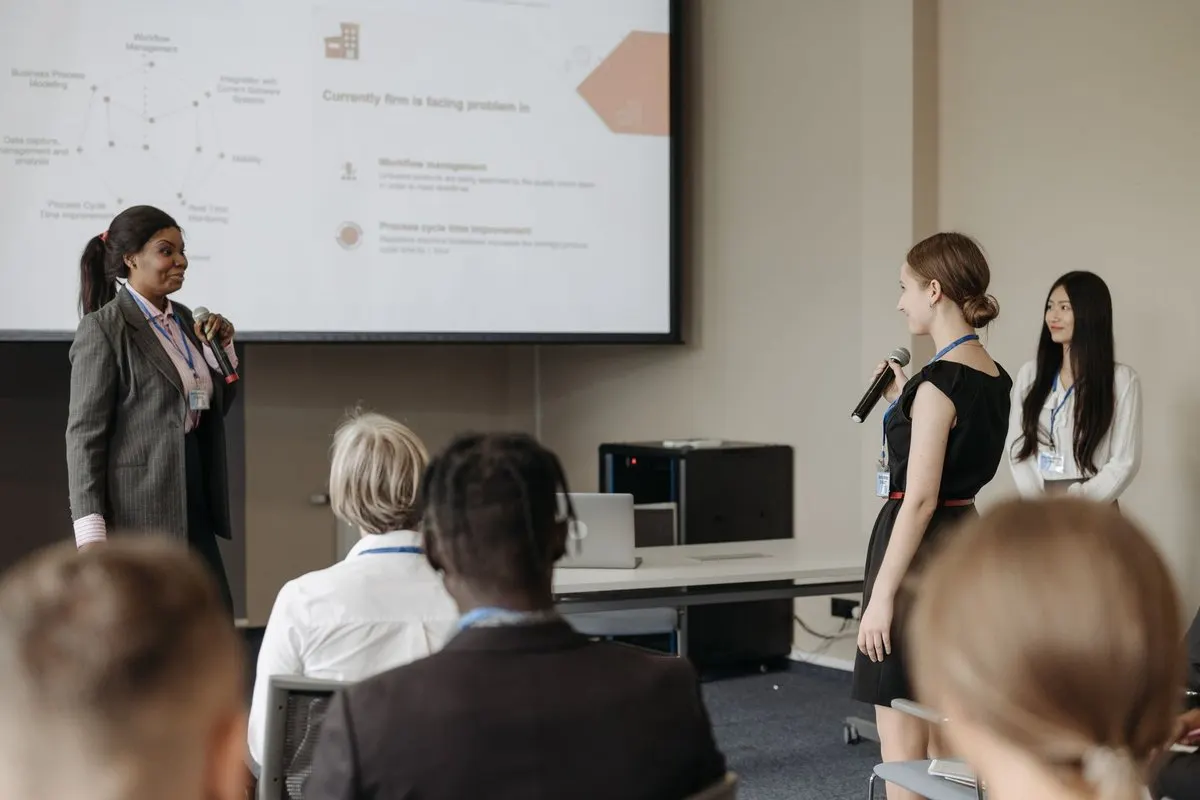
Ask the audiovisual team for a suitable speech feed from the stage microphone or mixer. If there is no sound desk, confirm a compatible dedicated microphone and input arrangement. Do not assume a laptop at the back of the room will capture a presentation clearly.
Configure the source and target language and prepare the listener session. Test the public link from a phone without the organiser logged in. In MoriahTech IA for events, attendees use a browser link or QR code and do not need an account or installed app.
Each session provides one target language. Several target groups or parallel rooms need separate planning and a capacity check before they are announced.
Test the speaker and the business vocabulary
Use the real speaker’s pace and accent. Include product names, abbreviations, dates, amounts, a negation and an instruction. Ask a bilingual reviewer to identify changed meaning and a target-language listener to explain what they understood.
Prepare materials and names in advance. The European Commission’s speaker guidance supports clear delivery and preparation for interpreted communication. Natural pauses and consistent microphone use help the audience as well as the interpretation route.
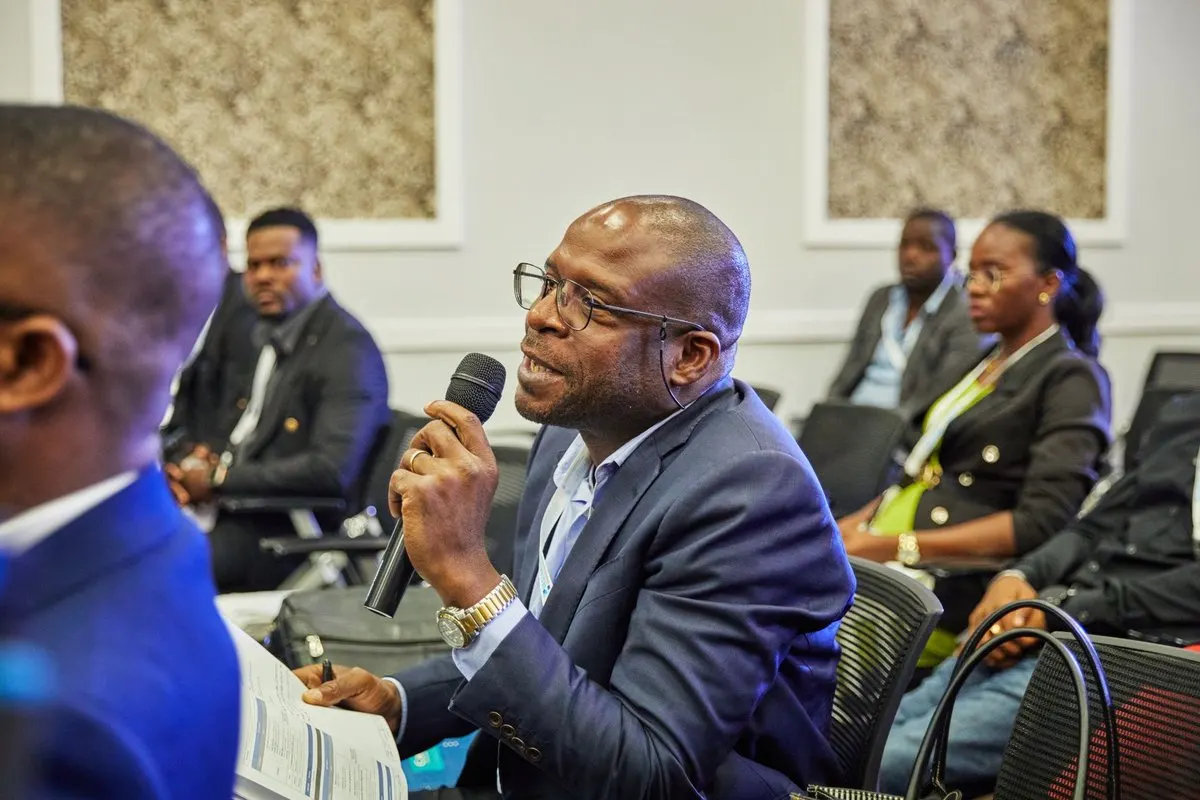
If the presentation includes questions, test the question microphone and moderation. A Spanish question inside an English-source session does not automatically establish bidirectional coverage. A bilingual moderator may need to restate the question in the agreed source language before the speaker answers.
Make access part of event communication
Tell attendees the available target language and that they should bring compatible headphones and a charged phone. Put the listener link in the event information, and label QR signs by room and language.
Assign someone to help during arrival and the first minutes. Explain whether translation is AI-generated and how to raise an issue. A service that exists but is difficult to find will not help the people it was intended for.
Practise with the actual printed sign and guest network. Check any Wi-Fi sign-in page and recovery after a screen lock or network change. A small successful rehearsal does not prove capacity for every guest device at once.
Compare the five capacity limits
MoriahTech IA’s one-off Event, Conference and Congress packs are currently €49, €89 and €149. They include 150/360/900 minutes, 1/3/6 sessions and up to 100/250/400 listeners per session respectively. Maximum session lengths are 180/240/240 minutes; simultaneous capacity is 1/1/2 sessions.
Packs remain valid for three months from activation and require request, payment and validation. Account creation alone does not activate paid capacity. Consult the current selector and cost breakdown before choosing.
Add your production costs: audio connection, network arrangements, preparation and people operating the event. A platform fee is not a quotation for a staffed conference.
Three corporate formats to evaluate differently
For a hypothetical kickoff with eighty translated listeners, one source language and one target language, test the hotel’s actual microphone feed and QR access. Capacity selection still depends on minutes, sessions and duration, not only eighty people.
For training with fifteen employees, a compatible presenter microphone and browser listening may be an arrangement worth rehearsing. Include technical vocabulary and the question format rather than testing only introductory remarks.
For an investor discussion or negotiation where wording and figures influence consequential decisions, prioritise qualified human interpretation. The convenience of a mobile channel does not remove that requirement for judgement.
Close the rehearsal with a decision
Record whether input, access, continuity and meaningful details passed your criteria. Assign a correction to every important failure and repeat it. Name the operator, audio contact and fallback action for the event day.
Create a rehearsal for your corporate programme, using the event checklist. Confirm active capacity and the corrected setup before telling attendees to rely on the service.