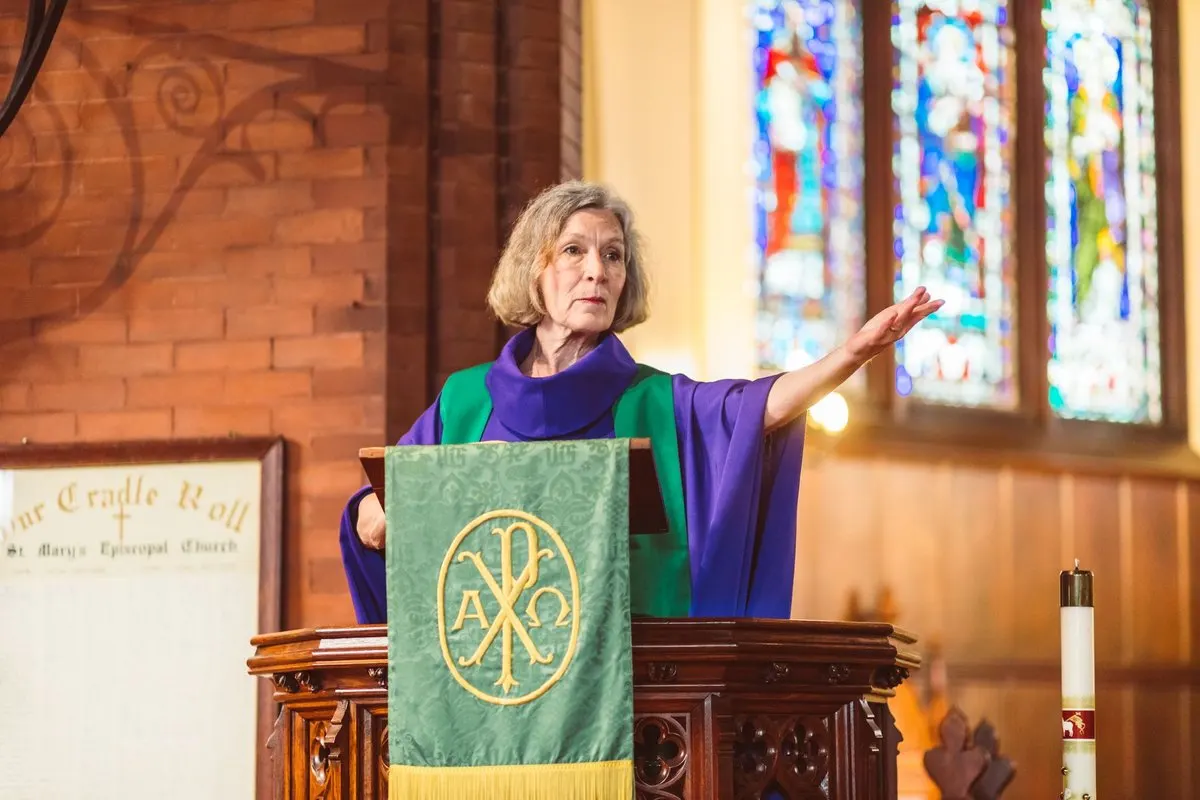
A guest preacher speaks Portuguese and part of the congregation needs to listen in Spanish. Similarities between the languages do not guarantee everyone can follow, especially a negation, date or Bible reference. Set a clear translation direction and rehearse with the guest's voice before announcing the service.
Start with the translation direction
For this service, the path is Portuguese → Spanish. In MoriahTech IA, the organiser chooses the source and target languages; the congregation listens to translated audio in a phone browser through headphones. Listeners enter by QR code or link, without an account or app installation.
Portuguese and Spanish are in the audio catalogue. Website interface languages are a different catalogue: seeing a language in the selector does not establish speech support. Do not assume automatic accent detection or language switching either; rehearse the guest's actual delivery.
See how MoriahTech IA works for churches
What to request from the preacher before Sunday
- A real excerpt from the sermon. Ask them to read it at their usual pace, including pauses and emphasis. A simple greeting can test the microphone but does not represent a complete biblical explanation.
- A short list of names, places and references. Include the intended Bible version and who will check passages in Spanish. This list supports preparation and review; it does not imply a custom glossary feature exists in the platform.
- Instructions the congregation must understand. Times, meeting locations and notices need a specific check. Agree that contributions and questions will use a microphone, with no overlapping voices.
Review biblical names and references in AI translation
A rehearsal that checks meaning as well as sound
- Connect the microphone or voice output you will use during the service. Check that the organiser's device receives the preacher clearly rather than a mix of music, echo and conversation.
- Ask the guest to read this rehearsal sentence: “A reunião não é amanhã; é no domingo, às dez”. The meaning to preserve in Spanish is: “La reunión no es mañana; es el domingo, a las diez”. This is a proposed exercise, not an accuracy test already conducted.
- Have a bilingual person listen from a seat and explain when the meeting takes place. Check the negation, day and time. Then repeat with the biblical excerpt, names and a question through the microphone. If the meaning changes, fix the path or choose human support before continuing.
Record errors and repeat the excerpt after each adjustment. Readiness means the listener can explain the message, not simply that the voice sounds pleasant. As a balance example, 20 rehearsal minutes with 1 target use 20 translation minutes; also reserve balance for the service.
Check the connection between the sound desk and computer
Copy this brief to coordinate the team
Preacher and contact: [specify]. Source: Portuguese. Target: Spanish. Passage and Bible version: [specify]. Names to review: [list]. Audio owner: [name]. Bilingual listener in the room: [name]. Listener access: [QR/link]. Rehearsal result: [negation, day, time, references]. If comprehension fails: [support person and agreed decision].
Test with your congregation before expanding
Start with a small group and the guest, or a representative sample of their voice. If someone then speaks Spanish, decide with the operator how to manage that section; it does not automatically become Spanish → Portuguese. This guide tests Portuguese as the source and Spanish as the target, not automatic two-way interpreting.
The trial includes 14 days without a card, 180 total minutes, 3 sessions of up to 120 minutes, up to 25 listeners per session, 1 target language and 1 active session at a time. The one-off technical check of up to 5 minutes uses balance without using a session. Internet is needed both to send and to listen.
Prepare the first listening session in Spanish
Create your account, configure the Portuguese → Spanish path and share access with your bilingual helper. You will have a concrete test to decide how to support those needing translation. If the rehearsal does not preserve meaning, arrange human interpreting and adapt the service format.